Morelia Bus Station (TAM) Guide - Taxis, Luggage, ATMs
What to do in your first ten minutes at Morelia bus station: buy the taxi ticket inside, find the ATMs, leave your bags, and get into the centre.
You have just stepped off a five hour bus in Morelia. You are holding a suitcase, your Spanish is somewhere between hola and nothing, and the building around you is enormous and full of people who all seem to know exactly where they are going.
Morelia bus station, properly the Terminal de Autobuses Morelia and known to everybody as the TAM, is one of the calmest and best run terminals in central Mexico. Nothing here is going to go wrong. But there are four or five things worth knowing before you walk out of the door, and one of them is the mistake almost every first timer makes: paying a driver outside instead of buying a taxi ticket inside.
The short version
Buy your taxi at the TAXIS / GUARDA EQUIPAJE window inside the hall, not from a driver on the pavement. The fares are fixed by zone, authorised by the state transport regulator, and the taxi service runs twenty four hours a day, every day of the year. Cash machines are in the main concourse beside the bathrooms. Luggage storage is that same counter, in Sala A and Sala B, also around the clock, at roughly seventeen pesos per piece per hour. Uber and DiDi may drop you off but are not permitted to pick up on terminal property. The historic centre is about six kilometres away, fifteen to twenty five minutes by road, and there is no sensible way to walk it with a suitcase. Bring your passport, because photo identification is checked when you buy a ticket and again when you board.
Everything below was checked on the ground in September 2026. Prices at a bus station move, so read the board at the window before you pay.
What the numbers on the map mean
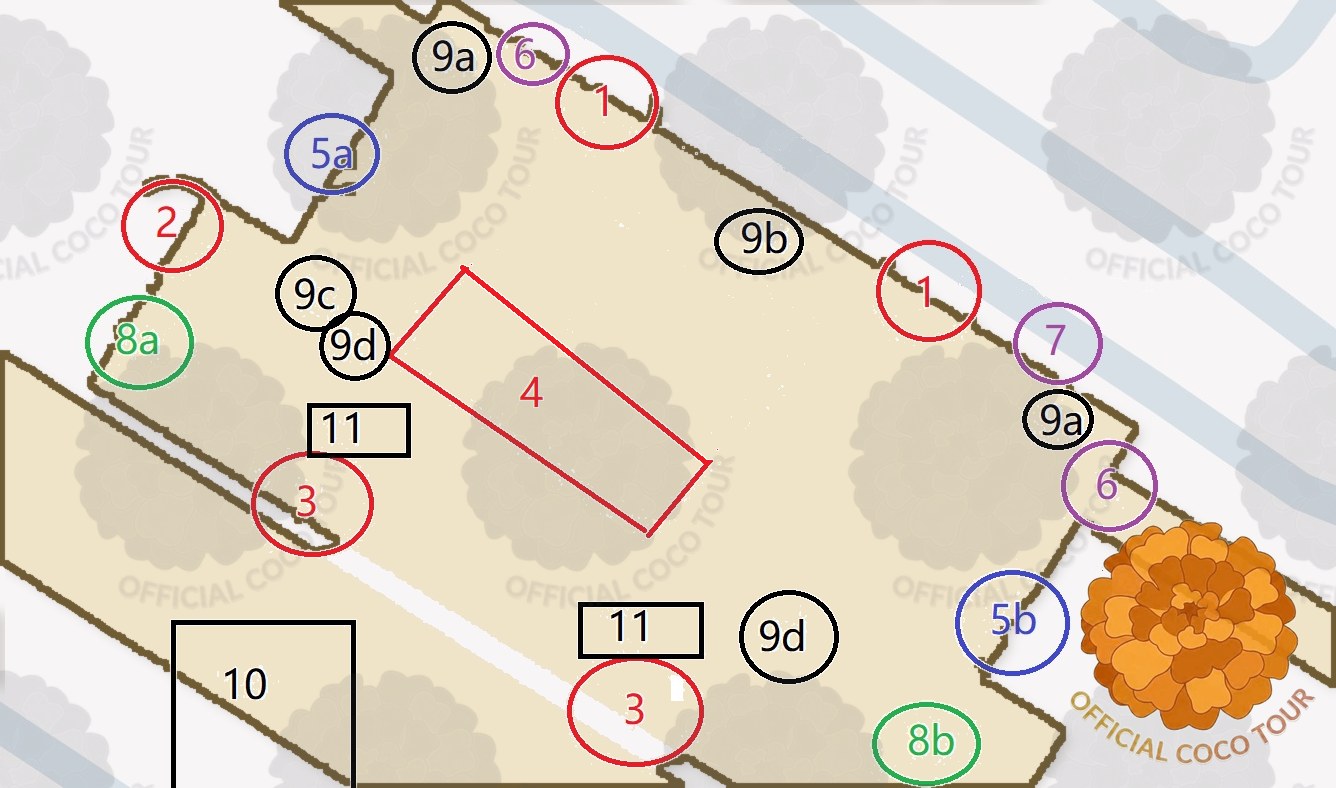
We drew that map because nothing like it exists for this station. The numbers below are the numbers on it, and the rest of the article explains what to do at each one.
1 Pedestrian entrances. Sala A is the one you will use, and the others can be ignored unless your bus company tells you otherwise.
2 Where arriving buses set you down.
3 The way through to your departing bus.
4 The ticket counters, one per bus line. Buy online in advance if you can, because these queue badly on holidays.
5 Bathrooms, 5a for women and 5b for men. Around eight pesos in cash, and water shortages are common.
6 Luggage storage and the taxi window, which are the same counter. 6a sometimes closes, so 6b is the safer bet.
7 The taxi rank, where you wait with the ticket you bought at 6.
8 Cash machines. 8a holds BBVA Bancomer, Banorte and HSBC, and the HSBC machine takes UnionPay cards, though it runs out of cash more often than the others. 8b holds smaller local institutions such as Caja Valladolid.
9 Food. 9a is pizza, 9b is a small canteen with limited service late at night, 9c is Subway, and 9d are convenience shops with a thin selection.
10 The platforms. Go through only when your departure is close, not to wait.
11 The waiting rooms, which are where you should sit rather than outside.
Where is Morelia bus station?
The terminal is on the Periferico Paseo de la Republica, on the western ring road next to the Estadio Morelos, roughly six kilometres from the cathedral. Locally it is la central, or la central camionera, and on signs and tickets it is the TAM. Stepping outside expecting colonial streets is the first small shock of the day.
The building is three connected halls, Sala A, Sala B and Sala C, arranged in a U around the taxi rank and the car park. Different companies use different halls, among them ETN, Primera Plus, Autovias, Parhikuni, Omnibus de Mexico and Estrella Blanca, and each hall has its own ticket counters, shops and taxi window. If nothing looks like the photographs you saw online, you are probably just standing in a different hall. They are joined by the same long marble concourse.
What the signs mean
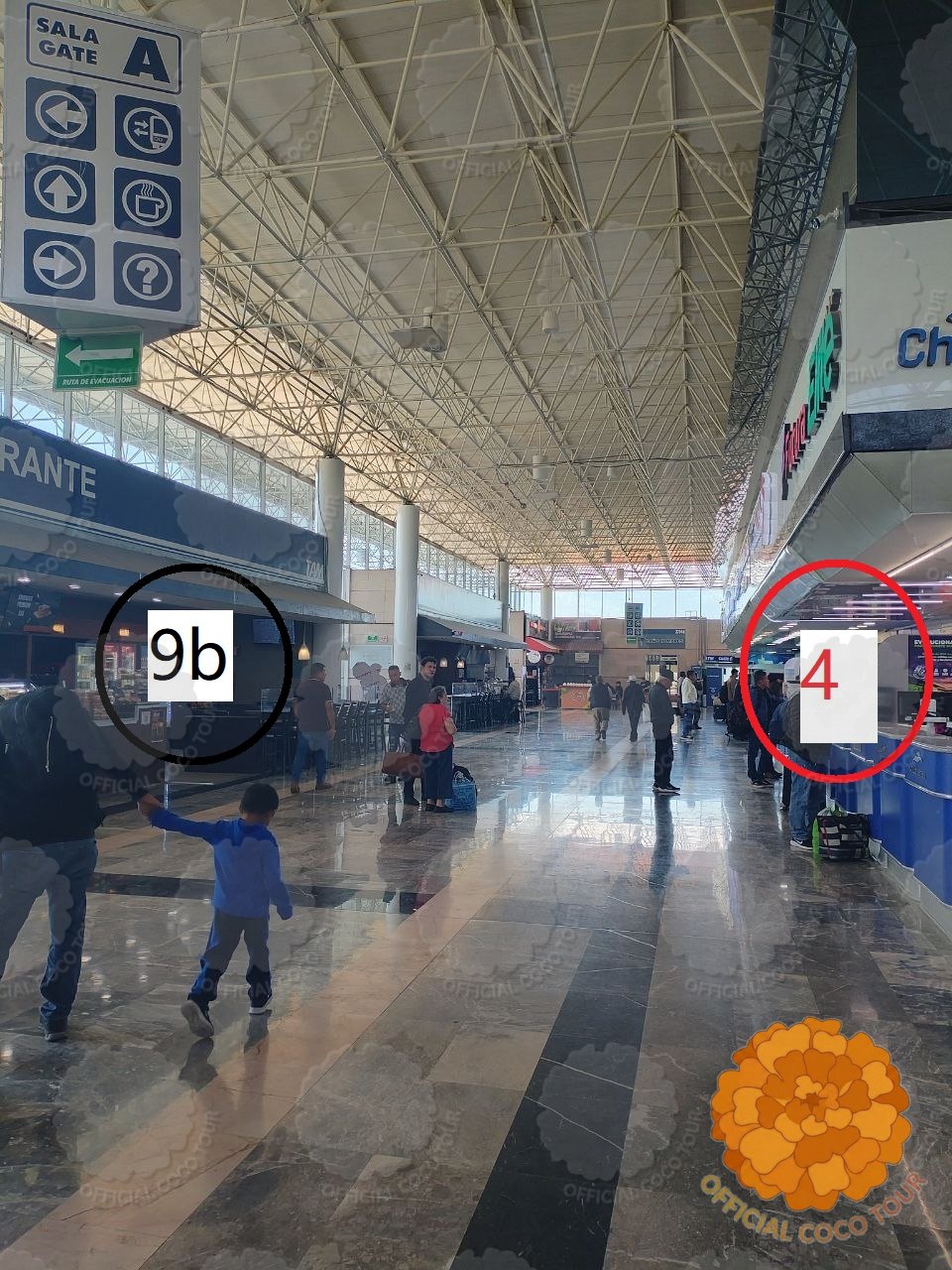
The overhead signs are pictograms and Spanish rather than English. SALA is a boarding hall. ANDEN is the platform your bus leaves from. SALIDA is the way out. TAQUILLA is a ticket window. GUARDA EQUIPAJE is luggage storage. A question mark is information.
One thing to have in your hand before you need it: official photo identification is asked for when buying a ticket and again when boarding. Bring your passport rather than a photocopy.
Your first ten minutes
Bathroom first, with coins ready. Cash machine second. Taxi window third. Then the door. That order matters more than it sounds, because once you are outside with a suitcase and no pesos, everything gets harder.
Before any of that, collect your suitcase from the hold and keep the little numbered stub the driver gave you. That stub is what claims the bag. Then walk into the main concourse and find a bench, because nobody makes good decisions standing in a doorway with a bag in each hand.
Check the bag before you walk away from the bus. If a zip is open or a lock has gone, photograph and film it where it stands and report it at your own company's counter, at 4 on the map, straight away. Once you have left the building it stops being anybody's problem but yours.
How do taxis work at Morelia bus station?
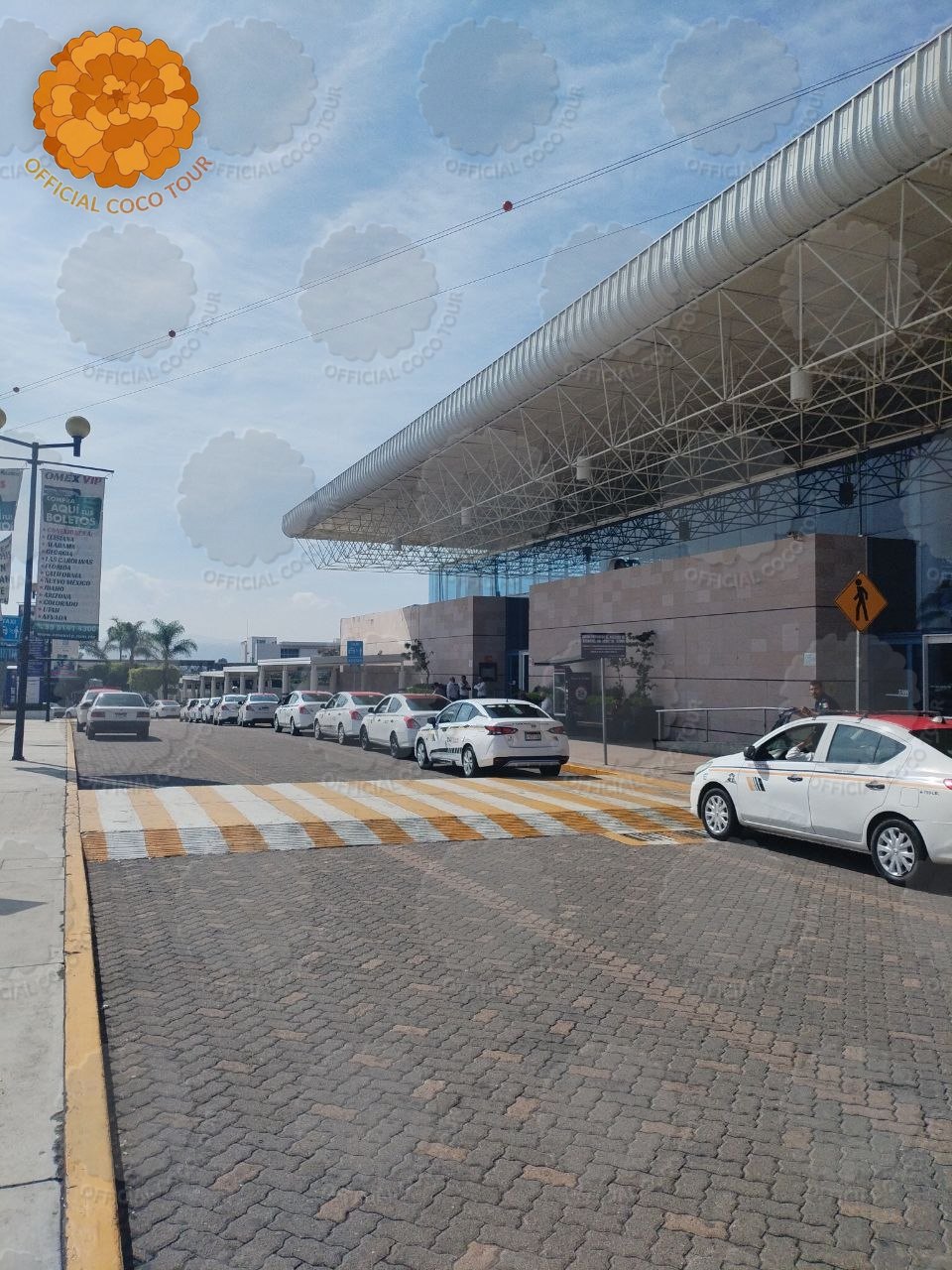
You pay for your taxi at a counter inside the building, not to the driver. This is the part people get wrong, so here it is plainly.
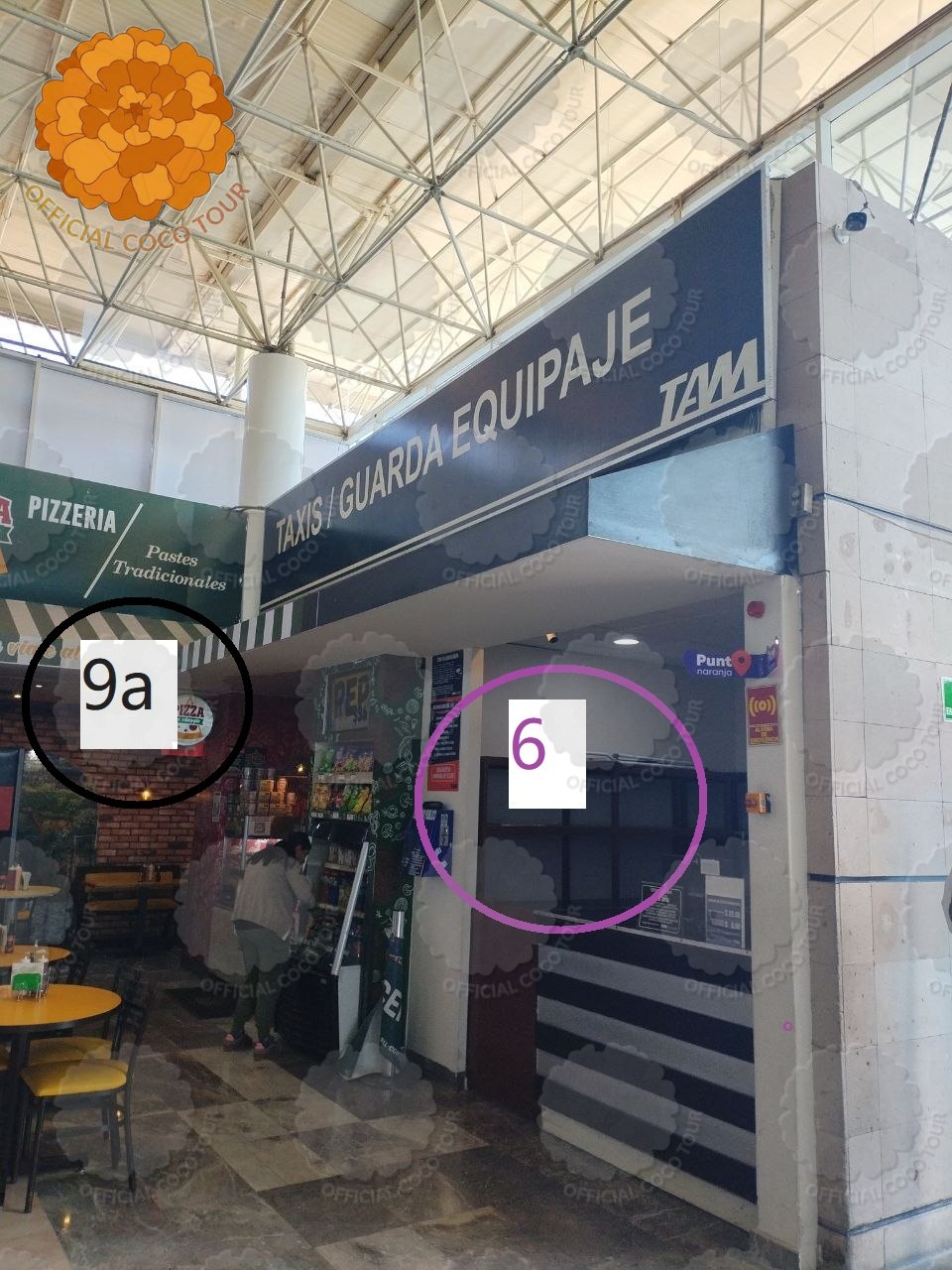
Look for the dark blue TAXIS / GUARDA EQUIPAJE sign. There is a window in every hall. You say where you are going, they quote a fixed price for that zone, you pay, and you are handed a printed ticket. Outside, you join the rank at 7 and hand the ticket to the next driver. You are given two copies: the driver takes one and you keep the other, which is what you need if something is left in the boot. No meter, no negotiation, no surprises.
The rates are authorised by the state transport regulator and the drivers belong to the terminal's own union, so this is not a tourist arrangement, it is how everybody does it. The service runs twenty four hours a day, every day of the year, which is why arriving here at three in the morning is far less alarming than it sounds.
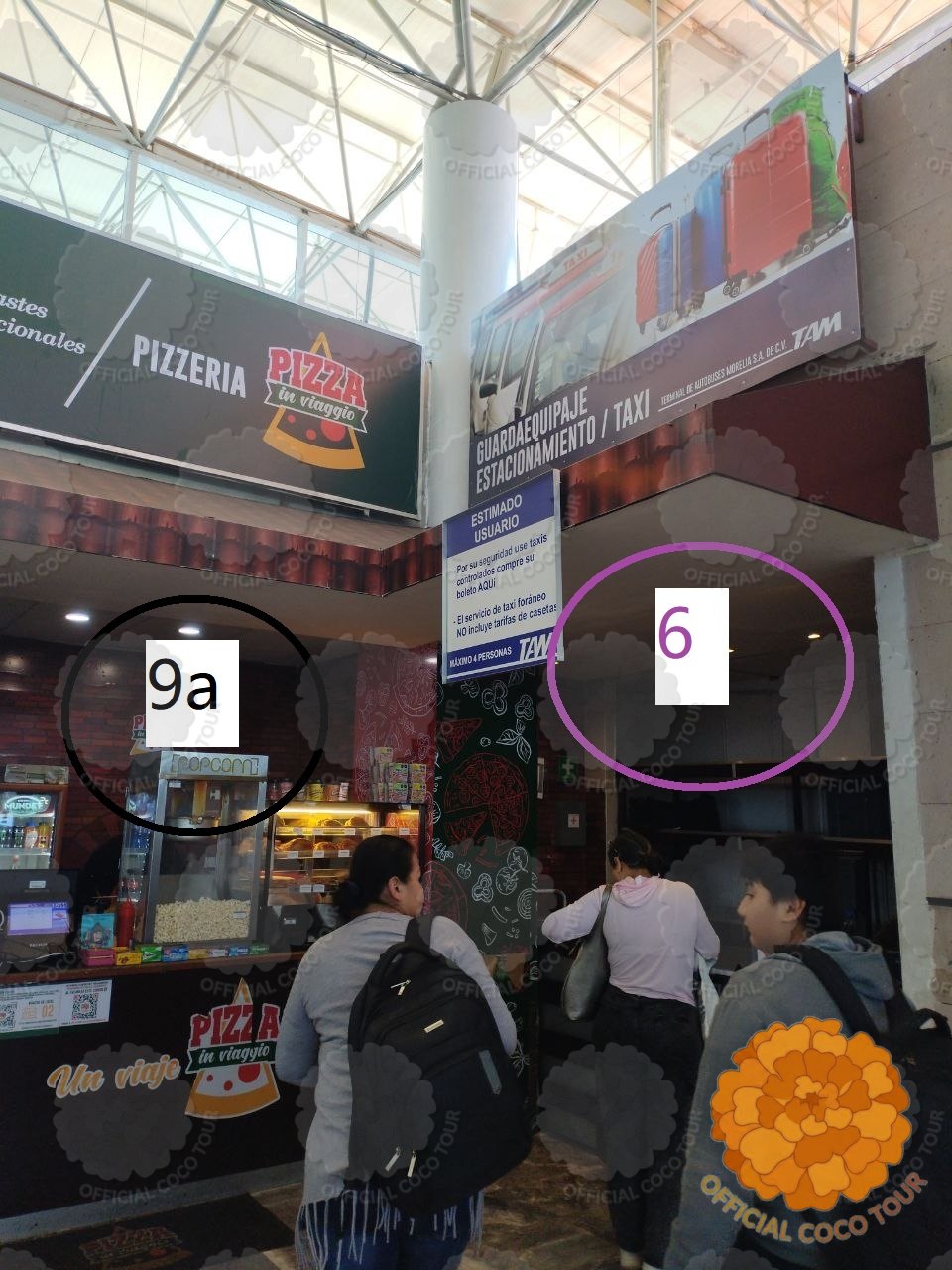
Four details on that blue notice are easy to miss. A taxi takes a maximum of four passengers, so a group of five is two taxis. Fares to places outside the city do not include the highway tolls, so if you are heading straight out of the city, to Patzcuaro for instance, ask what the tolls add before you commit. Keep the ticket until you have arrived and checked the boot. And nobody official will approach you offering a ride, so if somebody offers to carry your bag or find you a taxi before you have reached the counter, decline politely and keep walking.
Can I take an Uber or DiDi from the bus station?
You can be dropped off by Uber or DiDi, but not picked up. Both apps work in Morelia and both are often cheaper, but rideshare drivers are not allowed to collect passengers on terminal property, and the restriction is posted at the drop off area. Order one anyway and you can expect the driver to cancel, or to ask you to walk out to the ring road with your luggage.
For a first arrival, with bags, possibly in the dark, the authorised taxi is worth the small premium. Save the apps for the journey back to the terminal, which nobody restricts.
If somebody is collecting you by car
There is paid parking at the front and the rates are posted at the counter. The first hour or any part of it is twenty two pesos. After that it is six pesos for every fifteen minutes, and the car park is watched around the clock.
Losing the parking ticket is the expensive part. It is a two hundred and fifty peso charge plus the time on site, and whoever is claiming the car has to prove it is theirs. Tell your driver to photograph the ticket the moment they take it.
Is there luggage storage at Morelia bus station?
Yes. The guarda equipaje is the same counter as the taxis, marked 6a and 6b on the map, open twenty four hours a day every day of the year, and the published rate is around seventeen pesos per piece per hour, roughly a dollar. It is the most useful thing in the building and almost no visitor uses it.
One window sometimes shutters when the other stays open, and 6a is the one more likely to be closed. If you find it dark, walk round to 6b before concluding the service has stopped for the night.
That turns a dead afternoon into a day out. Connecting to Patzcuaro with six hours to kill: drop the bags, take a taxi into the centre, see the cathedral and the aqueduct, eat properly and come back. Hotel checkout at eleven and a night bus at ten, same answer.
Because it is priced by the hour it is excellent for a few hours and poor value for a few days, so do the arithmetic before leaving anything overnight. Keep the receipt, because losing it means showing photo identification and describing what is in the bag. And it is not long term storage: after thirty days it stops being their responsibility.
Where are the cash machines, and how much cash do you need?
There is a row of cash machines inside the concourse, signed CAJERO and ATM, at 8a and 8b on the map, next to the bathrooms and inside the secured building under camera. That makes them a better first withdrawal than a street machine.
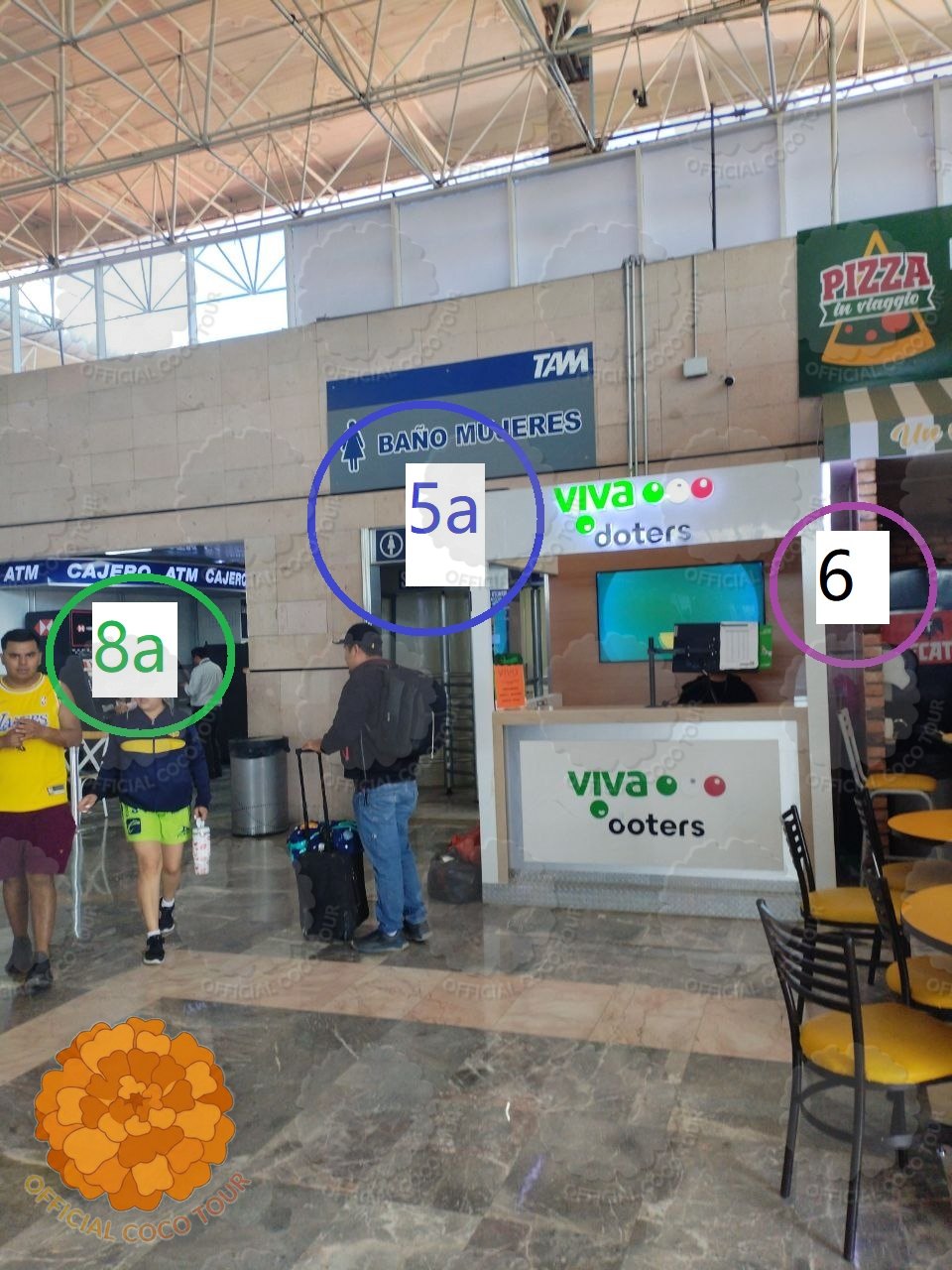
Try 8a first: BBVA Bancomer, Banorte and HSBC, and the HSBC machine accepts UnionPay, which matters if you are travelling on a Chinese card. It is also the bank of machines most likely to be empty, in which case 8b holds smaller local institutions such as Caja Valladolid rather than nothing at all.
Take out more than feels necessary. Cards work well in restaurants and hotels and badly everywhere else, which means markets, small kitchens, some taxis, church and museum entrance fees, and every tip you will give. Three or four thousand pesos on arrival is not excessive.
Two traps. The machine will offer to charge you in your own currency, and the answer is always no, always pesos, because that option quietly costs several percent. And the withdrawal fee is charged per transaction rather than per peso, so two large withdrawals beat six small ones.
Tell your bank you are travelling before you land, keep a second card somewhere else, and break your first large note early. Buying a coffee with a five hundred is how you end up with a wallet nobody can make change for.
Bathrooms, and why you want coins
Signposted BANO MUJERES for women and BANO HOMBRES for men, 5a and 5b on the map, off the main concourse beside the cash machines. The charge is around eight pesos, cash only, so keep coins in an outside pocket rather than digging through a money belt with a suitcase between your knees.
Water shortages here are common enough to plan around. Carry tissues and hand gel, go before you are desperate rather than after, and do not count on the taps. Paper is sometimes handed to you at the entrance and sometimes simply absent.
And used paper goes in the bin rather than the bowl, which is standard across Mexico and is about the plumbing rather than the preference.
Is the food any good?
Better than you are bracing for. The kitchens here carry the Distintivo H hygiene certificate, which is an audited federal standard rather than a sticker in a window, and a plate runs somewhere around thirty five to sixty five pesos.
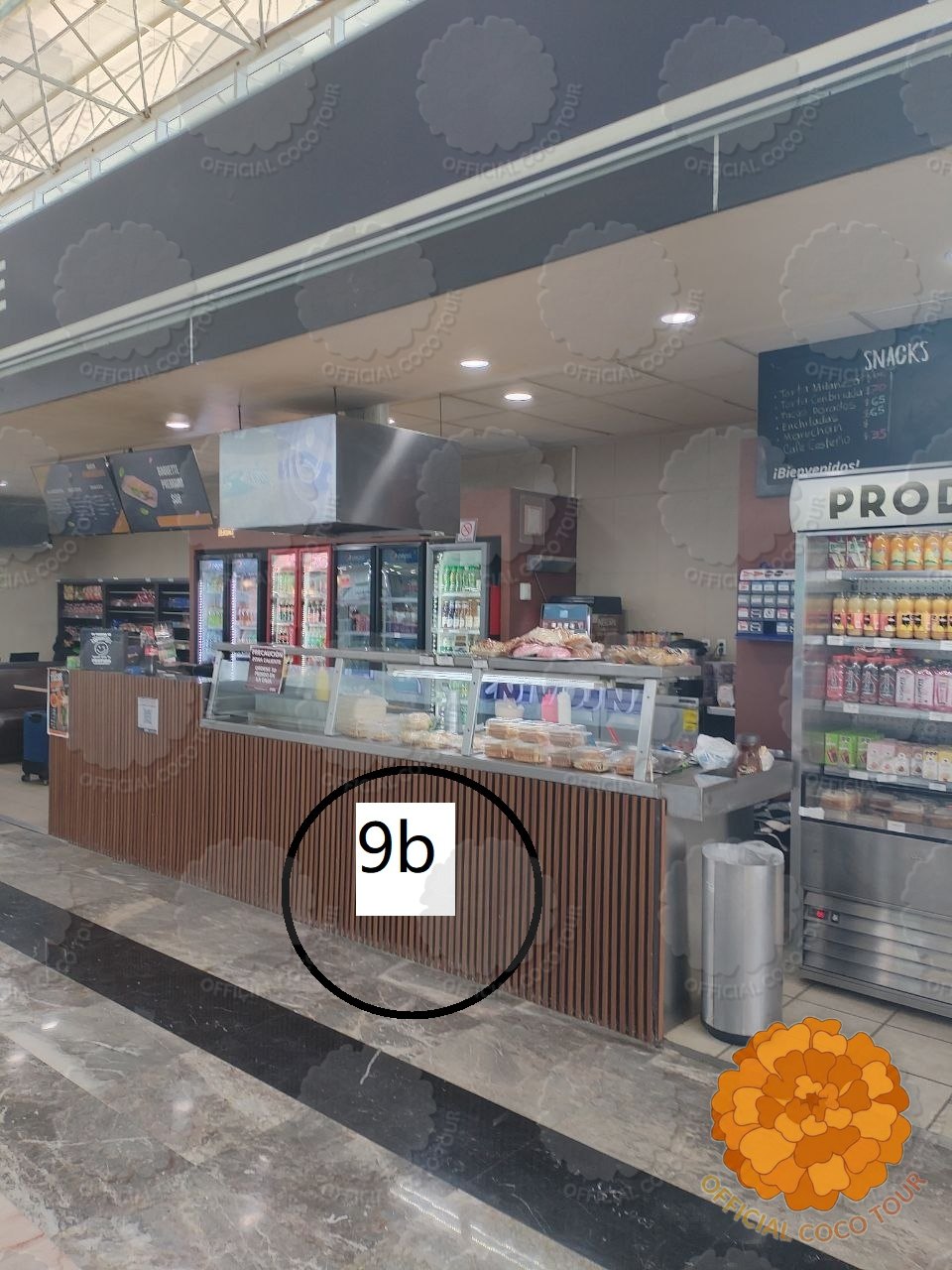
Look for the counters with a handwritten SNACKS board, the sort of place with a tray of pastries by the till and the menu chalked above it.
A torta is a substantial sandwich on a soft roll, and milanesa, which is breaded fried meat, is the safe and filling default. Enchiladas are worth ordering here specifically, because Michoacan's version is its own regional thing rather than the baked dish you may know. Tacos dorados are rolled and fried and travel well. The tray of sugar topped buns by the till is pan dulce, and a concha with a coffee is the standard Mexican breakfast and costs almost nothing. If cafe de olla is offered, take it: coffee brewed with cinnamon and raw sugar.
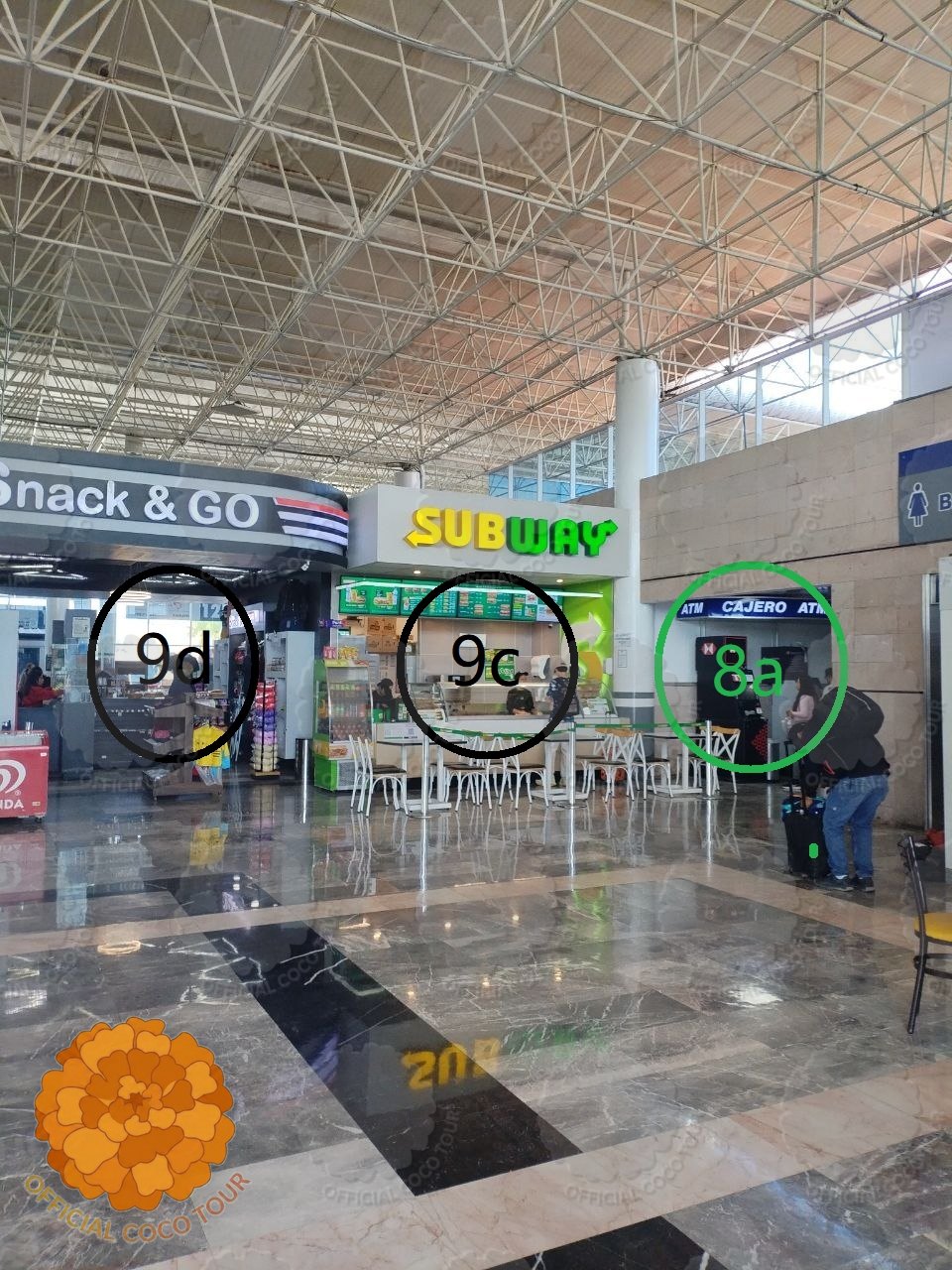
If you want something you already understand there is a Subway with seating, a pizzeria with tables, and shops selling crisps, biscuits, juice and cold drinks. There is no shame in this on day one.
The pizzeria also sells pastes, savoury filled pastries that arrived in Mexico with Cornish miners in the nineteenth century and stayed. Potato and mince, or sweet ones with pineapple. Extremely good on a bus.
Buy water before you board rather than after, because the toilet on board is often locked or limited. Order to take away if your bus leaves within twenty minutes, because the kitchens are not fast. And if you want dulces morelianos, the region's quince paste and caramel and candied fruit, the terminal shops sell them, but the Mercado de Dulces downtown is cheaper and far more fun.
Is there Wi-Fi and somewhere to charge?
There is free terminal Wi-Fi, with a portal to click through, and it is slow at busy times. There is also an internet room in Sala A.
Sockets exist but are contested, and the ones around the food court seating are your best chance. A multi port plug makes you popular.
If you do not already have data, buy a Telcel SIM or activate an eSIM before you arrive rather than trying to sort it out here. You want maps working the moment you step outside.
Is Morelia bus station safe at night?
Yes, and it is one of the safer places to land late. The terminal operates around the clock with cameras throughout and permanent staff, bags are inspected before boarding, and the authorised taxi service runs all night, so you never have to negotiate a fare on a dark pavement. The realistic risks are the ordinary ones: a bag left unattended, a distraction at the cash machine, a stranger being unusually helpful.
The taxi and luggage counter is marked as a Punto Naranja. That is part of a city wide network of designated safe points where a woman in a difficult or unsafe situation can go for immediate help and support from trained staff. The same orange logo appears at the tourist information modules around the historic centre, and it is a useful thing to be able to recognise.
For anything else, lost property or a missed connection or a platform that makes no sense, go to the ticket counter of your own bus company rather than looking for a general information desk. They are the ones who can actually do something.
Leaving Morelia by bus
Allow an hour: fifteen to twenty five minutes of driving in normal traffic, considerably more between six and eight in the evening, plus the walk to your platform.
Buy online in advance wherever you can. The counters at 4 are slowest on exactly the days you least want to queue, and a printed or phone ticket walks past all of it. Wait in the rooms at 11 rather than outside, and go through to the platforms at 10 only when your departure is close.
Bring your passport, because identification is checked when you buy and again when you board. Buy in advance for Sunday evenings, public holidays and the Day of the Dead, when this station is at capacity and taxis are scarce. Check which Sala your company uses before you set off, because the halls are connected but they are not quick to walk between with luggage.
Uber and DiDi can drop you off without any problem. It is only pickups that are restricted.
And when you hand your suitcase over at the bus you get a numbered stub. Do not put it in the bag. Do not put it in the pocket of the jacket that is in the bag either.
Day trips that start at this counter
Michoacan is one of the best places in Mexico for short bus hops, and they all leave from here.
Patzcuaro is about an hour away, cobbled and cool, and it is the single best half day trip from Morelia. Uruapan is around two hours, for the waterfalls and the national park in the middle of the city. Santa Clara del Cobre and Quiroga are reached by way of Patzcuaro, for copper work and carved wood. Zitacuaro is the jumping off point for the monarch butterfly sanctuaries between November and March.
Combine any of those with the luggage counter and you can fit a whole excursion between two long distance buses.
Spanish words that help
Un boleto de taxi al centro, por favor. A taxi ticket to the centre, please.
Guarda equipaje. Luggage storage, charged by the piece and by the hour.
En que anden. Which platform.
A que hora sale. What time does it leave.
Donde esta el bano. Where is the bathroom.
Cuanto cuesta. How much is it.
Acepta tarjeta. Do you take card.
Sin picante, por favor. Not spicy, please.
Se me perdio mi boleto. I have lost my ticket.
Questions people ask
How far is Morelia bus station from the centre? About six kilometres, fifteen to twenty five minutes by road, and not walkable with luggage.
How do I get from Morelia bus station to the historic centre? Buy a fixed price ticket at the taxi window inside the hall and hand it to the driver at the rank outside. It is the fastest and simplest option with bags.
Is the terminal safe at night? Yes. It operates around the clock with cameras and staff, and the authorised taxi service runs twenty four hours, so you never have to negotiate a fare on a dark pavement.
Can I take an Uber from Morelia bus station? Not from inside. Rideshare pickups are prohibited on terminal property, though drop offs are fine.
Can I store my luggage at Morelia bus station? Yes, at the taxi and luggage counter in Sala A and Sala B, around the clock, at about seventeen pesos per piece per hour.
Is there a cash machine at the terminal? Several, inside the main concourse next to the bathrooms, with more than one bank represented.
How much do the bathrooms cost at Morelia bus station? Around eight pesos, cash only, at 5a for women and 5b for men. Water shortages are common, so carry tissues and hand gel.
Which cash machine accepts UnionPay? The HSBC machine at 8a, alongside BBVA Bancomer and Banorte. It empties more often than the others, and 8b has local institutions such as Caja Valladolid as a fallback.
Do I need cash in Morelia? Yes. Cards cover restaurants and hotels, while markets, small kitchens, taxis and small entrance fees are cash.
Do I need my passport to travel by bus in Mexico? Bring it. Official photo identification is asked for when buying a ticket and again when boarding.
Which bus companies use Morelia bus station? Among others ETN, Primera Plus, Autovias, Parhikuni, Omnibus de Mexico and Estrella Blanca, spread across Sala A, Sala B and Sala C.
Want to see the whole thing?